Dog Days of Summer

It’s a Friday afternoon in the midst of a punishing heatwave in Swarthmore during the dog days of summer…

Photo by Paulette Wooten on Unsplash

…we’re just past the midpoint of the calendar year and a new academic year is on the horizon. What a good time to take stock of some of the goals we have achieved so far and to think about new ones for the upcoming year.

Since starting in this position, I’m proudest of these things:

  • IRB approval for usability testing
  • Approval to hire students at the highest pay grade who earn CITI certification and are trained as usability session facilitators
  • Robust usability sessions of our online library tools each month. Huzzah!
  • Establishment of an engaged Library Student Advisory Board for User eXperience (LabX) which meets monthly and provides invaluable feedback
  • Improved wayfinding signs in McCabe Library with the help of my colleague, Visual Initiatives + Exhibitions Librarian Susan Dreher

Some goals for this coming year:

  • Communicate my work more effectively through more frequent, shorter blog posts, posts to our library staff email digest, flyers, and an occasional newsletter (maybe…)
  • Collaborate with the AUX Committee to formalize our Assessment Plan based on our operational goals and objectives
  • Cultivate the use of our Data Dashboard for more cross-pollination of our data stories
  • Seek out relationships in the college community outside the libraries. I’m looking at you Office of Institutional Research, Communications Office and Center for Innovation and Leadership!
  • Continue to work on the ACRL Proficiencies for Assessment Librarians and Coordinators
  • Build relationships with librarians outside of Swarthmore College by becoming more active in professional organizations

Happy weekend – stay cool and hydrated!

Bench-marking the user experience from one interface to another

As we settle in becoming more accustomed to the newest version of Tripod, it is useful to look back and remember the massive amounts of work that went into system migration.

A year ago, most of my colleagues were heavily invested in necessary behind-the-scenes planning and technical work, while I focused on how best to address the approaching changes to the public-facing user interface with our users.

Many of us have opinions about how we’d like websites to look and feel in addition to how we want them to work, but the best way to know whether an interface functions well aside from visual design is through usability testing. Are users able to accomplish the tasks for which they came to the site?

In preparation for system migration, I held usability sessions with the now-retired version of Tripod in order to be able to compare results for how users accomplished essential tasks there with what we would learn from usability sessions in the new system.

What tasks are essential to users of a library search interface? We decided to test the following:

  • Account login: including saving items of interest to lists, sharing them with others or sending them to yourself via email or text
  • Known-item searches: placing a hold or a request from another Trico Library, and if the item is not available, taking the next step toward E-ZBorrow and ILL
  • Broad searches followed by use of facets (the “Refine your Search” options at the left of the screen) to limit results
  • Finding items on Reserve for class

In the fall of 2018, users of “old” Tripod had success logging into their accounts, adding items to lists of favorites, and emailing or texting the information to themselves or a research partner.

They were able to find specific titles and to place holds and Trico requests. And despite some participants having no experience with E-ZBorrow or ILL, they had heard about these services and were able to navigate to the appropriate links.

But despite the near ubiquity of facets on monster, commonly used websites like Amazon, many Swarthmore students either have not noticed them in Tripod or have not used them. This task caused trouble.

And every user struggled to find items on Reserve for a specific course using Tripod.

These results were not surprising. Library searching can be complex, we know there are students who do not use Tripod and novice researchers may struggle with even the most intuitive interface. The purpose of these sessions was to set a baseline for comparing results between old and new Tripod.

So about those! Results from post-launch usability sessions on “new” Tripod early in 2019 were largely the same: students navigated intuitively to the basics of what they could accomplish while logged into their account, they found relevant results for their known-item searches and pathways to place requests and to borrow beyond Trico. They also overlooked facets and really struggled to find Reserves!

We’ve already made improvements to the Tripod interface and have prioritized making the pathway to Reserves more intuitive before classes begin in the Fall.

Regular usability sessions are vital to improving user interfaces and the libraries run them monthly during the school year. Keep your eyes out for calendar announcements, stop by and try it! The “tests” are of our online interfaces, not users! It’s fun, you’ll be rewarded with a home-baked treat, and best of all, you’ll help to keep making Tripod (or the website, or Research Guides) better!

MISO

The Libraries and ITS participated in the Measuring Information Service Outcomes, er, the MISO survey this year. MISO is a web-based quantitative survey designed to measure how faculty, students and staff view library and computing services in higher education.

The two departments first participated in this nationally run survey in 2016 and decided to repeat the survey every three years. We hope to learn from longitudinal data and want to be aware of any trends.

The Libraries were particularly interested in the 2019 survey results, since the new version of our catalog, Tripod, launched in December and the survey ran shortly afterward, in February. We knew there were hiccups in the Tripod launch and were eager to compare the community responses about the library catalog to their responses in 2016.

Interestingly, while we have much still to learn from MISO results, there were no statistically significant differences in how our community views our services since 2016, including the catalog, Tripod. Yet, we are aware of deeper questions to ask of the data and of areas for which additional research is needed.

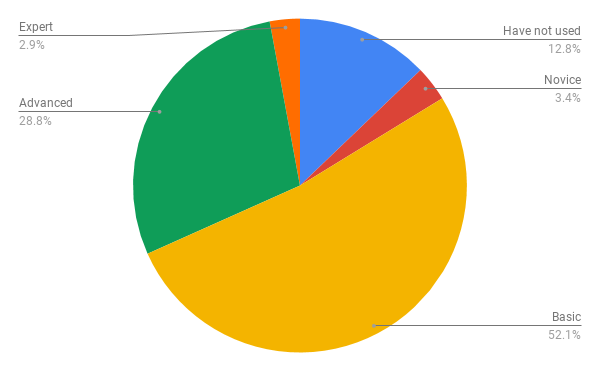
For example, we learned that a higher percentage of faculty do not use Tripod or library databases than we would expect and further discovered that the number of faculty who do not use these resources has increased from 2016 – 2019. The number of faculty who say they “do not use” Tripod rose from 7.4% in 2016 to 12.9% in 2019. We’re in the process of cross tabulating the data with help from colleagues in the Office of Institutional Research in order to learn the extent to which academic division or other factors may play a role in the increase.

Faculty Survey: Skill Level with Tripod

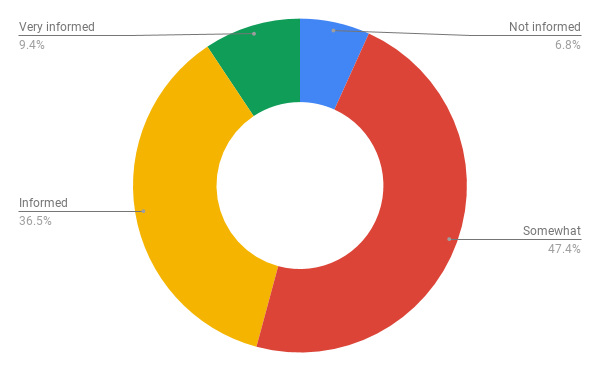
Another area for further exploration is the number of faculty, students and staff who say they feel “not informed” or only “somewhat informed” about library services. To help us communicate what services we offer more effectively, we need to first learn what people think of when they see the term “library services.” Do they think about circulation, or perhaps access to online resources? Naturally, we’d prefer a larger percentage of our users feel “Informed” about our services, so we’re thinking of ways to address this.

Student Survey: How informed do you feel you are about library services?

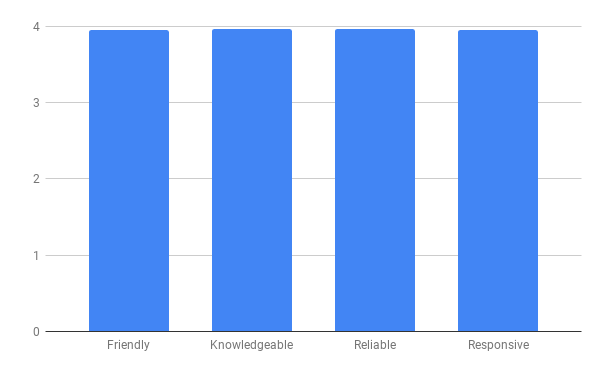
On a wonderful positive note, our faculty, staff and students continue to rate their satisfaction with librarians very highly, between 3.8 or 9 on a 4 point scale, for being friendly, knowledgeable, reliable and responsive. Thank you Swarthmore community – we love you right back!

Staff Survey: How satisfied are you that the library circulation staff are: Friendly, Knowledgeable, Reliable and Responsive?

Serendipity…

…the occurrence and development of events by chance in a happy or beneficial way.

Several years ago, I was invited to work with a Swarthmore College alumnus to learn about website user experience and to use what I learned for our library catalog redesign project. The alumnus had offered his time to the College and I happened to be available and interested in a new project. While the redesign project was compelling, the biggest impact for me was the revelation of a new focus in librarianship.

My exposure to the power of observing how users navigate our tools created a deep interest, not only in how users interact with the shared, online tools we provide, like Tripod (our library catalog) and Research Guides, but also in the broader contest of the role of the libraries in the research process.

How do our users approach their research? How do they navigate finding what they seek? How can we best support this process? How do information architecture, web content, writing for the web and web design work together to propel research forward, or alternatively, raise barriers or introduce pain points that get in the way? How do we provide the best environment for discovery? What role do library spaces and services play in the research process?

One of my goals as the Assessment and User Experience Librarian @ Swarthmore is to communicate regularly about what I’ve learned from user experience and assessment projects. I’d like to share our practices for user research, be able to demonstrate why it’s important and what impact it has on our systems and spaces.

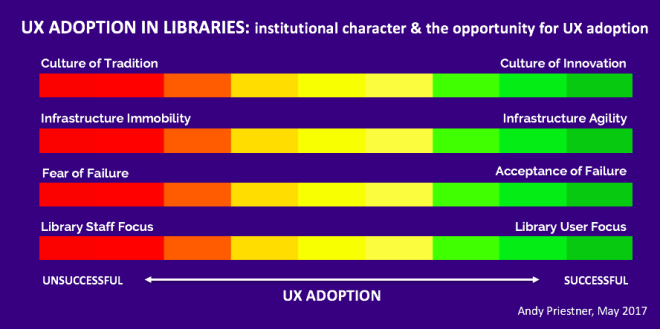
To close my first post, I’ll share the graphic, below, created by library UX practitioner Andy Priestner and first unveiled at his talk at the 2017 UX in Libraries conference in Glasgow. For additional fun, you may follow the prompts at this site created by another library UX practitioner, Vernon Fowler, and score where you think your library falls on these continua. For even more fun, try it as a group and talk about where you would place your library.